
Maruti Suzuki, Hyundai and Tata Motors reported their highest-ever dispatches to dealers last fiscal, enabling the domestic passenger vehicle industry to log in best-ever performance to date. The country's largest carmaker Maruti Suzuki India reported its highest wholesales to date at 19,66,164 units, up 19 per cent from 16,52,653 units in 2021-22. Its domestic dispatches rose to 17,06,831 units in 2022-23, up 21 per cent from 14,14,277 units in 2021-22 fiscal.Hyundai Motor India said its overall wholesales last fiscal were the highest ever since commencing operations in the country.


Retail sales of vehicles across categories in India grew by 11.21 per cent at 32,08,719 units in November, as compared to 28,85,317 units in the same month last year riding on two-wheeler demand, Federation of Automobile Dealers Associations said in Monday. Retail sales of two-wheelers were at 26,15,953 units last month, as compared to 22,58,970 units in November 2023, a growth of 15.8 per cent buoyed by the festive spillover.

Dealers have stocked up vehicles in the run-up to a price hike, which is expected to be announced by leading players some time this month.

Risks emerging from the US have left automotive investors worried. US President Donald Trump has announced 25 per cent tariffs on automotive imports, while global electric carmaker Tesla has taken its first steps towards entering India. While these developments are sentimentally negative for related stocks, it may be too early to conclude the eventual impact, analysts said.

However, the company has not provided a timeline for the launch of the small electric car.

In 2024 alone, South India saw the highest rise in sales in the luxury segment, with Tamil Nadu reportedly registering a 19.3 per cent increase in premium car registrations from 2022-23

Maruti, Honda and Tata Motors posted highest sales growth during the month

Car sales in India surged by 12.87 per cent in December.

Tata Motors' 2022-23 (FY23) January-March quarter (fourth quarter, or Q4) results were better than Street estimates, with strong showing across Jaguar Land Rover (JLR), as well as commercial and passenger vehicle businesses in the domestic market. The company posted its highest consolidated top line and operating profit, with growth of 35 per cent and 46.5 per cent, respectively, over the year-ago quarter. While the top line was aided by a 49 per cent growth in the JLR unit, all key segments reported margin expansion.

From its lows in December, the stock of Tata Motors is up about 15 per cent. The gains came on the back of better than expected December volumes in its UK-based subsidiary Jaguar Land Rover (JLR). This coupled with gradual recovery in the global passenger vehicle demand, improving profitability due to product mix and lower commodity costs are expected to be key positives for the company.

There is no impediment to normal operations as Tata Motors puts in place the demerger process of its commercial and passenger vehicles businesses. Instead, the demerger would provide greater manoeuvrability for both new entities to operate independently, according to Tata Motors management. While there may not be immediate value unlocking, it will give investors clarity about future growth and the financials across different segments.

Automakers Maruti Suzuki, Mahindra & Mahindra and Audi India on Monday announced plans to hike prices of their passenger vehicles in January 2024 citing reasons, including cost pressure driven by overall inflation and increased commodity rates. Besides, Tata Motors and Mercedes-Benz India are mulling increasing the prices of their models from January. The country's largest carmaker Maruti Suzuki India, which sells a range of vehicles from entry-level small car Alto to multi-utility vehicle Invicto, priced between Rs 3.54 lakh and Rs 28.42 lakh (ex-showroom Delhi), on Monday said the price hike would vary from model to model.

One reason for the upward revision in the forecast comes from the surprise growth of 9.45 per cent notched by the industry since the beginning of this year.
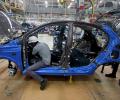
Automobile industry in India is going through a long-term structural slowdown as the compound annual growth rate (CAGR) across all major vehicle segments has witnessed a decline over the last three decades, as per industry body SIAM. The auto industry has been facing headwinds even before the COVID-19 pandemic derailed the entire sector last year, a research conducted by the Society of Indian Automobile Manufacturers (SIAM) has revealed. The study clearly shows that the pandemic is not the only reason for the auto sector slowdown, which is facing deeper structural issues that need attention, the industry body noted.

The Cyberster is currently sold in the UK for about Rs 63 lakh and is expected to be priced between Rs 65 lakh and Rs 70 lakhs.

'We will have multiple engine options -- electric vehicle and internal combustion engine in diesel and petrol.'

Passenger vehicle wholesales in India rose by 14.16 per cent in August to 2,15,916 units, driven by pent-up demand, industry body SIAM said on Friday. According to the latest data by the Society of Indian Automobile Manufacturers, passenger vehicle wholesales stood at 1,89,129 units in the same month last year.

'Every Indian should move to an EV, and the government should not buy any fossil fuel cars. The government should become the first driver of EV adoption.'

Even as India's passenger-vehicle sales touched a record high of 3.9 million units in 2022-23, growing 27 per cent over the previous financial year, the country's largest carmaker, Maruti Suzuki India (MSIL), said on Monday uncertainties in the electronic-component supplies might affect production in FY24. MSIL said the shortage of electronic components had some impact on production in FY23. "The company took all possible measures to minimise the impact.

Retail sales of automobiles in the domestic market saw a 7.73 per cent year-on-year decline in October this year at 21,17,596 units, mainly due to dip in two-wheeler uptake with the inauspicious period of Shraddh affecting new purchases, the Federation of Automobile Dealers Associations (FADA) said on Monday. Retail sales of automobiles in the domestic market stood at 22,95,099 units in October 2022, FADA said in a statement. Two-wheeler retail sales were at 15,07,756 units last month, as against 17,25,043 units in the year-ago period, down 12.60 per cent, as per the latest data by FADA.

While commercial vehicles are expected to benefit from strong replacement demand, the two-wheeler and tractor segments are expected to gain from a recovery in the rural economy.

Automobile retail sales increased 9 per cent year-on-year in June quarter FY25 with all segments, barring tractors, reporting growth, dealers' body FADA said on Monday. Overall retail sales rose to 61,91,225 units in the April-June period from 56,59,060 units in the same quarter of FY24. Passenger vehicle retails increased 2.53 per cent to 920,047 units as against 897,361 units a year ago.

The only other company working on hydrogen cars in India is Toyota Kirloskar Motor.
Automobile (auto) retail sales in India grew by an impressive 14 per cent in July compared to the same period last year, driven by a surge in the rural economy, good product availability, and product launches. While passenger vehicles (PVs) saw a 10 per cent increase during this period, inventory levels have surged to a historic high of 67-72 days in PVs, equating to Rs 73,000 crore worth of stock, according to the Federation of Automobile Dealers Associations (Fada). This poses a risk to dealer sustainability. Inventory levels in July 2023 were only 50-55 days, equating to a stock worth Rs 49,833 crore. In June 2024, inventory was between 62 and 67 days, with a stock value of Rs 60,000 crore.

Automotive retail sales saw a 14 per cent rise in March on a year-on-year (YoY) basis, according to data released by the Federation of Automobile Dealers Associations (FADA). For the whole of financial year 2022-23 (FY23), sales grew 21 per cent YoY. For both March and the financial year, all categories, except for tractors, and including two-wheelers, three-wheelers, passenger vehicles (PVs), and commercial vehicles (CVs), posted double-digit growth. However, the total retail sales of 22.1 million for the financial year were still 12 per cent lower than the pre-Covid (FY20) level of 25 million, owing to an 18 per cent dip in the two-wheeler segment.

Auto majors, including Maruti Suzuki India, Hyundai and Tata Motors, on Sunday reported high double-digit growth in their domestic passenger vehicle sales in July riding on stabilisation of macro-economic factors and better consumer sentiments. Similarly, Honda, Nissan, MG Motor and Skoda also reported healthy growth in their sales last month leveraging on improved market mood amid prevailing lower coronavirus infection rate, despite supply constraints of semi-conductors. The country's largest carmaker Maruti Suzuki India's (MSI) domestic sales increased by 39 per cent to 1,41,238 units last month as against 1,01,307 units in July 2020, the company said in a statement.

Auto majors report positive sales figs for November.

Shares of Hyundai Motor India Ltd, the Indian arm of South Korean automaker Hyundai, on Tuesday made a muted market debut and further fell by nearly 6 per cent against the issue price of Rs 1,960. The stock listed at Rs 1,931, reflecting a decline of 1.47 per cent from the issue price on the BSE. Later, the stock made some recovery and hit a high of Rs 1,968.80, up 0.44 per cent.

Automobile exports from India recovered in the first quarter with all vehicle segments, including passenger vehicles and two-wheelers, witnessing growth following an improvement in the pandemic situation across various international markets. As per the latest SIAM data, total vehicle exports during the April-June quarter this fiscal stood at 14,19,430 units as compared with 436,500 units in the same period of 2020-21 which saw massive disruptions due to the COVID lockdowns across the country, hampering sales as well overseas shipments. SIAM director general Rajesh Menon told PTI that while two-wheeler shipments were better than previous three years, passenger vehicles, three-wheelers and commercial vehicles export numbers were yet to catch up with numbers in the first quarter of 2018-19 fiscal.

Tata Motors is the leader in the electric car market with about 62 per cent share.

New Delhi's timing couldn't have been worse, both for India's fledgling electric vehicle (EV) sector and prospective electric bike buyers. It was hard to miss the perfect storm brewing for India's EV industry since early 2022. On one hand, you had several accidents involving battery fires that unnerved consumers; on the other, uncertainty had crept in over subsidies.

Even though Bharat Forge's performance in the July-September quarter broadly met Street estimates and defence orders are on the rise, the subdued outlook for its global business has prompted some brokerages to adopt a cautious stance on the company. Analysts have reduced the company's earnings per share (EPS) estimates to account for the slow recovery of its overseas subsidiaries. Valuations are also trading at long-term averages, which could limit potential upsides.

Tata Motors recorded its highest-ever monthly retail sales in November on the back of robust demand for its sports utility vehicles amid the festive period, according to a top company official. In an interaction with PTI, Tata Motors passenger vehicles managing director Shailesh Chandra said the automaker retailed around 53,000 units in November, which was 8 per cent higher as compared to October this year and 30 per cent up as compared to sales in November 2022. The company also witnessed strong sales performance in the 47 days long festive period this year with registrations of around 79,374 units, up 18 per cent over the same period of last year.

With sentiment for the automotive (auto) sector turning positive, stocks of two-wheeler auto majors have been hitting their 52-week highs. Hero MotoCorp, Bajaj Auto, TVS Motor Company, and Eicher Motors recently reached their yearly highs on strong sales in the festival season and the expectation of faster growth rates ahead. Since the start of this month, listed two-wheeler majors have delivered returns in the 12-17 per cent range, compared to the 7 per cent gains for the S&P BSE Auto Index and 3 per cent for the benchmark S&P BSE Sensex.

Leading automakers Maruti Suzuki India, Hyundai and Tata Motors reported a double-digit increase in dispatches to dealers in April as the demand remained robust especially for the sports utility vehicles. The country's largest car maker Maruti Suzuki India (MSI) said its domestic passenger vehicle wholesales rose 13 per cent to 137,320 units last month as against 121,995 units in April 2022. Sales of mini cars, comprising Alto and S-Presso, fell 18 per cent to 14,110 units as compared with 17,137 units a year ago.

With India's EV penetration at just 2.5 per cent, the market presents an opportunity -- provided Tesla gets its pricing right.

Prices of various car models -- ranging from entry-level hatchbacks to high-end luxury offerings -- are set to rise as automakers have announced price hikes with effect from January. Carmakers cite an increase in input costs and operational expenses as the main reason to implement price increases from the next month. Industry experts, however, note that the exercise is also undertaken by automakers every year in December to shore up sales volume in the last month of the year, as customers postpone buyouts to later months to get the new year manufactured units.

The rise of startups and a thriving entrepreneurial culture in Tier-II and Tier-III cities is contributing to the increasing sales of high-end cars.
